Sep 26, 2026News & Insights
What is a Common Rail Diesel Injection System?
CRDI is the dominant, Bosch-pioneered diesel injection technology that is widely used but poorly understood — and this guide sets out to fix that by covering how it works, what's in it。
What is a Common Rail Diesel Injection System?
If you own a modern diesel vehicle, chances are it uses a common rail direct injection (CRDI) system. Since Bosch introduced the first commercial common rail system in 1997, this technology has become the global standard for diesel engines, powering everything from passenger cars to heavy-duty trucks. Despite its prevalence, many buyers, mechanics, and fleet operators still misunderstand how it works and why it matters. This guide breaks down the system, its components, and the trends shaping it in 2026.
How Common Rail Differs from Traditional Diesel Injection
Older inline injection systems combined the high-pressure pump, fuel line, and injector into one mechanical chain. Pressure varied with engine speed, injection timing was rigid, and emissions were hard to control. Common rail systems decouple pressure generation from injection. A high-pressure pump charges a shared fuel rail — the "common rail" — that holds fuel at a constant pressure of up to 2,500 bar (and even 2,700 bar on the newest Bosch CRS3-27 platform). The injector then becomes a simple, fast-switching valve controlled by the engine ECU.
The practical result is a quieter engine, cleaner exhaust, lower fuel consumption, and the ability to perform multiple injection events per combustion cycle. For buyers, that translates to better drivability and easier compliance with Euro 7 and EPA Tier 4 Final regulations.
The Core Components of a Common Rail System
A complete common rail system has five main parts:
High-pressure pump — typically a Bosch CP4 or CP5, drives fuel into the rail at extreme pressure.
Common rail (distributor pipe) — a thick-walled accumulator that holds fuel at constant pressure for all cylinders.
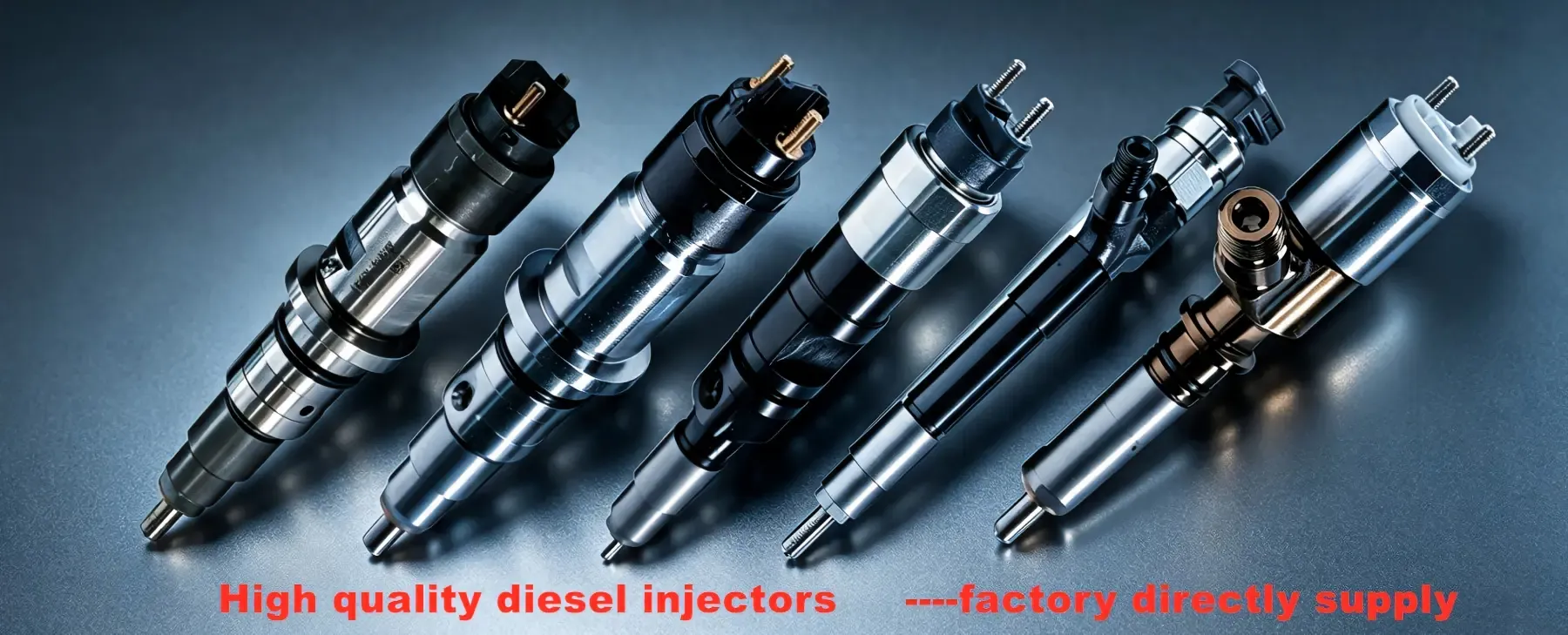
Injectors — solenoid or piezo units that meter fuel into each cylinder based on ECU commands.
Control valves — the SCV (suction control valve) and DRV (drain / pressure regulator) that regulate rail pressure.
ECU and sensors — rail pressure, camshaft, and coolant sensors feed data back to the ECU in real time.
Inside each injector, smaller precision components like the valve rod, orifice plate, nozzle spring, and spacer shim determine the spray pattern and flow rate. At Shandong Derun, we manufacture many of these sub-components, including control valves, valve rods, injector bodies, springs, and shims, to OEM-level tolerances.
Solenoid vs Piezo Injectors: Which Do You Have?
Two injector technologies dominate the market. Solenoid injectors use an electromagnetic coil that opens the nozzle when energized. They are durable, affordable, and account for roughly 62% of the global market by revenue in 2025. Piezo injectors use a piezo crystal stack that expands instantly when voltage is applied, allowing for faster, more precise injection events — typically 70% faster response than solenoids. Bosch CRS3-27 and Denso's fourth-generation i-ART injectors are leading piezo platforms.
The trend is clear: piezo adoption is rising, especially for Euro 7 heavy-duty applications. For most aftermarket buyers, solenoid injectors still offer the best cost-to-performance ratio.
Why Common Rail Systems Fail — and What 2026 Data Shows
Common rail is reliable, but not invincible. According to a 2026 VDMA survey, the on-time delivery rate for common rail suppliers dropped from 89% in 2023 to 67% in 2025. More worrying, Bosch CP4 and CP5 pumps saw a 41% year-over-year increase in warranty claims in US heavy-duty trucks, mostly due to cam and roller wear. The root causes are usually one of three:
1.Fuel contamination — water, dirt, or metal particles scoring the nozzle and valve components.
2.Low lubricity fuel — modern ultra-low-sulfur diesel strips the lubrication film, accelerating wear.
3.Neglected filtration — skipping fuel filter changes allows abrasive particles into the high-pressure circuit.
The good news: most failures are preventable with a 30,000-mile filter change interval and a quality pre-filter water separator.
2026 Trends Worth Watching
Three shifts are reshaping common rail technology in 2026. First, rail pressure keeps climbing — Bosch has demonstrated systems operating at 2,700 bar to enable finer atomization and lower NOx. Second, remanufactured injectors are growing fast as fleet operators chase sustainability and cost targets. Third, smart injectors with built-in pressure and temperature sensors (such as Denso i-ART) are starting to appear in aftermarket replacement programs.
For B2B buyers, this means sourcing components that match the platform's pressure rating and control strategy. A Bosch CP4.1 injector rated for 2,000 bar should not be paired with a 2,500 bar rail. Match the spec, not just the part number.
Conclusion
Common rail diesel injection has been the dominant diesel technology for nearly three decades, and it is evolving rather than disappearing. Whether you service passenger cars, run a fleet, or distribute parts internationally, understanding the components, failure modes, and platform trends is essential. If you are sourcing control valves, valve assemblies, injector bodies, or precision sub-components, working with a manufacturer that tests every batch on an EFS single-shot test bench — like Shandong Derun — is the surest path to consistent quality.
Contact BT diesel for OEM and aftermarket common rail components.
────────────────────────────────────────
Have questions about a specific common rail part or platform? Leave a comment below or reach out to our technical team for a free consultation.